
Curious about how to make the most of your airline miles? Understanding frequent flyer programs can unlock a world of benefits, from seat upgrades to luxurious in-flight experiences. Let's break down some key strategies and insights to help you use these programs effectively.
Understanding Airline Loyalty Programs
Keen on stretching those miles to the max? Let's examine some frequent flyer programs to see how you can fly higher, literally!
American Airlines AAdvantage
Status Synergy: Elite status with American Airlines is the ticket to those tantalizing upgrades. The order goes from Gold, Platinum, Platinum Pro, to Executive Platinum, with ConciergeKey at the top. If you fly often, this tiered system could have you lounging in business or first class sooner than expected.
Mileage Makeover: Your regular miles change through travel, credit card purchases, and even dining out. Want to upgrade? You'll need a certain combination of miles and maybe some cash, depending on the fare class of your ticket. Keep an eye on those H, K, M, L, V, G, Q, N, O, S buckets for discounted economy fares eligible for upgrades.
Systemwide Upgrades (SWUs): Here's the best part: for those at Platinum Pro and above who gather up to 175,000 Loyalty Points, the golden goose lays SWUs. These work like magic wands, transforming economy seats into plush business class spaces.
United Airlines MileagePlus
Climbing the Ladder: United's MileagePlus program favors frequent flyers with an escalating system of Premier Silver, Premier Gold, Premier Platinum, and Premier 1K. Each step you climb brings you closer to those front-of-plane seats.
Flexible Rewards: Your miles here adapt based on travel region, fare class, and elite status. That means if you're eyeing a specific route, United can calculate your upgrade needs precisely. Got those B, Y, or O fares? They often skip the cash co-pay.
Priority Play: United neatly stacks its upgrade list by elite status, then the fare class, followed by the time of the request. So, having a Premier Gold or above can significantly increase your chance of securing that lie-flat seat.
Tricks of the Trade
- Look for Upgrade Inventory: Whether you're flying American or United, upgrade availability isn't wide open. Both airlines have their secret fare classes that indicate potential upgrades. Examine detailed searches; instinct might not lead the way here!
- Utilize Your Connections: Spend generously but wisely on airline credit cards. They help accumulate miles faster, and often come with initial bonus offers lucrative enough to get you closer to that desired upgrade.
- Waitlist Wisdom and Patience: If your upgrade doesn't click instantly, waitlist can be your friend. But remember, it's more like a VIP pass into a concert, not an express ticket. Non-elites, don't feel discouraged; just keep checking and be flexible with your plans.
Ways to Upgrade with Miles
Ready to swap your cramped economy seat for a cozy business class experience? Let's examine the ways you can use those precious airline miles to upgrade your flight.
Mileage Upgrades are available to everyone, not just elite fliers. If you've collected a decent stash of miles through travel, credit cards, or dining establishments, you're already halfway there. The key is knowing which tickets qualify. For instance, American Airlines lets you upgrade eligible tickets with a mix of miles and sometimes a cash co-pay. A discounted economy ticket might set you back 15,000 miles plus $75 for a domestic upgrade, whereas a full-fare economy seat needs just 5,000 miles with no cash co-pay.
Systemwide Upgrades (SWUs) are the golden tickets, often earned by high-tier elites like Platinum Pro and above on American Airlines, typically after accumulating up to 175,000 Loyalty Points. These perks let you leap from economy to business class in one swift move, and they're especially valuable for those long-haul international flights where comfort really matters.
Complimentary Elite Upgrades are the dream for any frequent flyer. American Airlines has recently opened the door to unlimited complimentary upgrades for all elite members, doing away with the cumbersome 500-mile upgrades. Whether you're flying domestically, to the Caribbean, or Central America, if you're an elite member, an upgrade could be yours for the taking.
So, what's the catch? Upgrades are often subjected to a careful pecking order. Elite status reigns supreme, so if you're not in those top tiers yet, your best bet is to strategize earning those Loyalty Points or leveraging credit card benefits. For those still climbing the ranks, regularly monitoring upgrade availability can make a difference, and being flexible with your travel dates can tip the scales in your favor.
Remember, understanding the specifics of upgrade prerequisites and procedures is crucial. Whether it's querying the airline's website, using platforms like ExpertFlyer to hunt down upgrade inventory, or simply calling reservations to confirm your place on the list, being proactive pays off.
So, gear up, be vigilant, and let your miles work wonders. Before you know it, you'll be sipping on complimentary champagne, stretching out in a lie-flat seat, and reveling in the perks of business or first-class travel. Smart strategy meets sweet rewards—your journey to a better flying experience begins here.
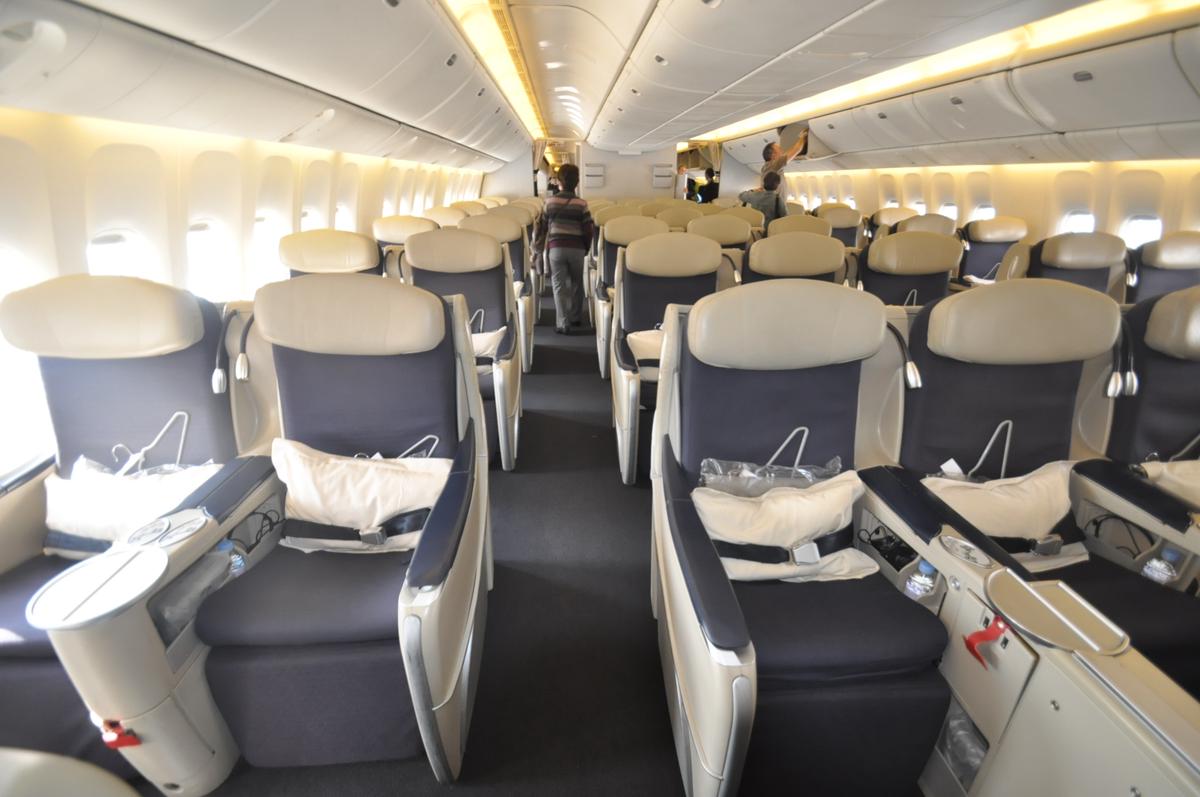
Calculating Miles for Upgrades
How many miles do you need for that dream upgrade? Let's examine the charts, calculators, and fare classes to uncover the secret sauce in planning your upgrade strategy.
First off, review those upgrade charts. American Airlines, for example, offers a handy AAdvantage mileage upgrade chart that breaks down how many miles you need to cash in for an upgrade, depending on your destination and fare class. It's not rocket science, but it does require a keen eye. The chart separates upgrades by fare classes, which are the unsung heroes (or villains) in your upgrade journey.
For instance, upgrading a discount economy seat (think fare classes like H, K, M, L) to business class on a domestic flight will cost you around 15,000 miles plus $75. Meanwhile, if you booked a full-fare economy seat (denoted by Y), you're looking at a measly 5,000 miles with no cash co-pay. Moves like these can save significant points and cash, trimming the fat off your travel budget.
Now, let's talk calculation tools. Airlines like United offer upgrade calculators on their websites to take the guesswork out. Enter your travel details—origin, destination, fare class—and voila, the cost for your upgrade pops up. For example, a mid-tier economy fare (like B or Y) on United could sidestep traditional co-pays, distinguishing itself from those dirt-cheap economy tickets (N, Q, O) which might slap you with a heftier co-pay.
Another layer in this upgrade cake is the understanding of fare classes. Deciphering these can seem like unlocking the Da Vinci code, but stick with me. Fare classes, represented by letters like Y, H, Q, and V, dictate not just the flexibility and perks of your ticket but also your upgrade potential. Here's a rule of thumb: the cheaper the fare, the more you might need to pony up both in miles and cash co-pays.
So how do you master this? Start by strategically booking those mid-to-higher fare classes if you're eyeing an upgrade. Avoid the basic economy trap unless absolutely necessary. And always, always, lean on those airline tools and calculators—they're like training wheels for budding travel pros.
Scrutinize flights before booking—consider the fare class and cross-check it with upgrade charts to gauge total costs. Calculate miles using the provided tools. This calculated vigilance—along with keeping tabs on upgrade inventory—ensures every mile you spend carries you further, both in the air and on the upgrade list.
In the end, spreadsheets and mileage calculators are your best friends here. Chart your probable upgrades before committing to your ticket. It's like having a mini-strategy workshop every time you fly. Bottom line—an informed flyer is an upgraded flyer. Examine the details, play the system smartly, and you'll soon find yourself lounging in those coveted business class seats, sipping bubbly and feeling like you've cracked the flying upgrade code.
Timing and Availability
Timing and availability – the twin pillars that can make or break your upgrade dreams. Let's examine the process of securing that elusive seat upgrade, and understand how a well-timed strategy can convert miles into front-row comfort.
Timing is everything. Airlines release upgrade inventories at different times, and knowing when to pounce can significantly enhance your chances. Generally speaking, the closer to the departure date, the narrower the window. However, don't dismiss checking way in advance – sometimes those golden slots open up early!
Elite status serves as your golden ticket. The higher your elite status, the earlier you can request and potentially secure an upgrade. For example, American Airlines grants Executive Platinum members a 100-hour head start before departure. Meanwhile, Platinum Pro and Platinum members get 72 and 48-hour windows, respectively, to potentially lock in their upgrades. Gold members, don't worry – you're still in the game with a 24-hour notice.
Booking codes are the unsung strategy of seasoned travelers. These single-letter identifiers on your ticket describe the fare class, which deeply influences your upgrade odds. Airlines often prioritize full-fare passengers for upgrades before considering discounted fare classes. The hierarchy looks something like this:
- Y and B (full-fare economy) usually rise to the top
- M, H, Q, K, L, V, G, S, N, O (discounted economy) fall in the middle
- X or U (deeply discounted tickets) might find themselves lower in the upgrade pecking order
Being mindful of your booking code when purchasing can tilt the scales in your favor.
Now, what about waitlisting? It can feel like waiting for a concert ticket that might get released last minute. But here's your silver lining – knowing the peak travel times when the likelihood of cancellations increases. Holiday seasons, corporate travel peaks, or even weekend flights are instances when stays get changed, and seats open up. Keep a strategic eye on these windows.
Once you're on the waitlist, patience and vigilance become your allies. Airlines prioritize based on elite status and fare class, but persistence pays off too. Regularly check your flight status, and don't hesitate to call the airline to remind them (politely) of your existence. Customer service agents can sometimes manually adjust waitlists, so making a good impression can give you an edge.
Confirmation processes can vary, but generally, if your upgrade hasn't cleared 24 hours before the flight, your chances start dwindling. However, last-minute miracles do happen – especially if you stick close to the gate and inquire tactfully. Airlines prefer filling premium seats, even if it means upgrading waitlisted passengers at the eleventh hour.
In essence, success in scoring upgrades boils down to a harmonious blend of elite status leverage, booking code strategy, timely intervention, and an unwavering spirit. Always have your finger on the pulse of upgrade possibilities, and stay nimble with your plans.
Maximizing Value from Points Transfers
Let's dive into every points enthusiast's favorite topic: maximizing value from points transfers. This is where strategy meets savings, and we're going to explore how to turn those points into the luxury seat upgrades you've been dreaming about.
Knowing your transfer partners is crucial. American Express Membership Rewards and Chase Ultimate Rewards offer extensive networks of airline and hotel partners, providing countless opportunities to transfer and redeem points for high-value upgrades.
American Express Membership Rewards:
Transfer Partners and Ratios:
- Delta SkyMiles: 1:1 ratio. Watch for transfer bonuses which can boost the value by 20-40%.
- British Airways Executive Club: 1:1 ratio. Great for short-haul flights and can be transferred to partners like American Airlines.
- ANA Mileage Club: 1:1 ratio. Excellent for long-haul international business or first-class upgrades, with fantastic redemption rates and generous stopover policies.
Chase Ultimate Rewards:
Transfer Partners and Ratios:
- United Airlines MileagePlus: 1:1 ratio. Great for Premier Gold perks and upgrade needs.
- Southwest Rapid Rewards: 1:1 ratio. While not typically for premium seats, Southwest offers unique perks like hassle-free upgrades and companion travel.
- Singapore KrisFlyer: 1:1 ratio. Perfect for luxury experiences like Singapore Airlines Suites.
Sweetening the Transfer Pot
Keep an eye out for transfer bonuses. These can significantly increase the value of your points, turning 1,000 points into 1,250 or more. Combine these with favorable transfer ratios, and you're on your way to first-class success.
Hotel Points to Airline Miles
Don't forget about hotel loyalty points. Programs like Marriott Bonvoy have excellent transfer capabilities across multiple airlines. Bonvoy points transfer to miles at a 3:1 ratio, often with a 5,000-mile bonus for every 60,000 points transferred.
Strategic Use of Translation Tools
Translation tools and points calculators are essential. They provide live updates on how many points will transfer and the equivalent miles you'd receive. Sites like AwardHacker or PointsGuy offer tools to forecast transfer outcomes and maximize your rewards' power.
Quick Tips on Highest Yield Transfers
- Stay Informed: Subscribe to newsletters and set alerts for transfer bonuses.
- Leverage Flexible Rewards: Manage a portfolio of rewards cards to capitalize on the best transfer partners.
- Hotel Partner Maximization: Consider hotel programs like Hilton Honors, which often offer huge bonuses for significant spending on their properties.
Remember, points transfers aren't just a random move—they're a calculated gambit. Mastering this skill not only upgrades your travel class but also optimizes your entire travel strategy. So gear up, play smart, and let those points take you places far beyond your travel dreams.
Mastering airline loyalty programs can transform your travel experience. By understanding elite statuses, mileage plans, and upgrade opportunities, you'll be well on your way to enjoying a more comfortable journey. So keep strategizing and let those miles elevate your next flight.